Online High School

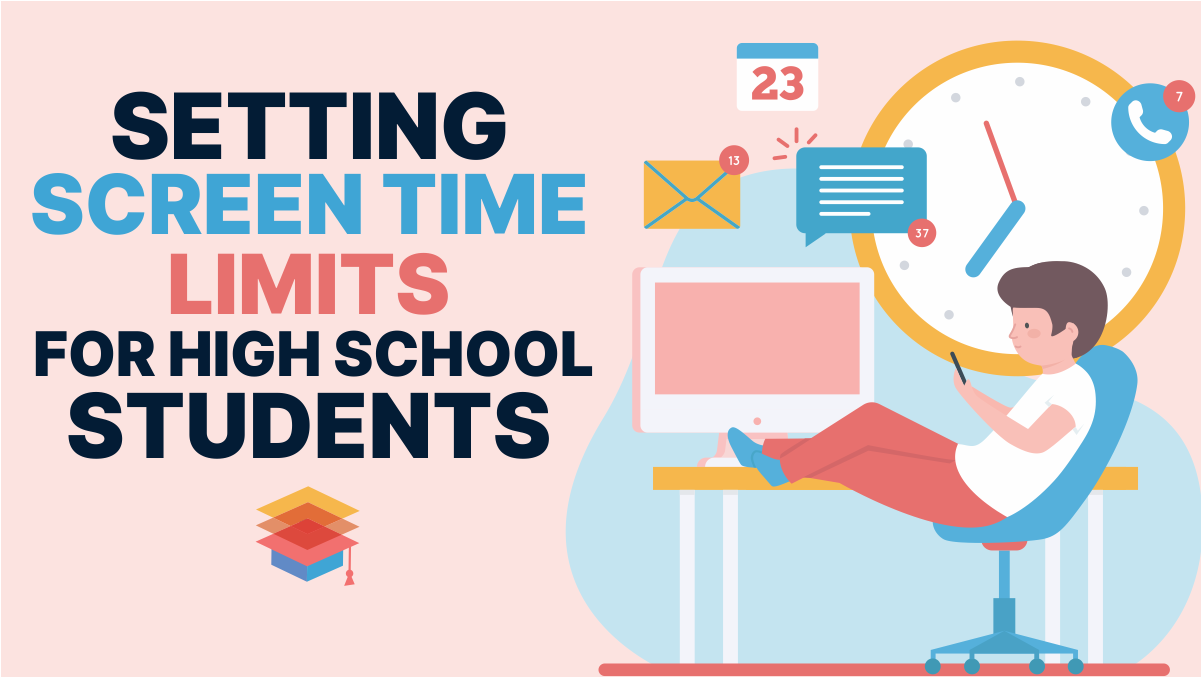
Setting Realistic Screen Time Limits: A Guide for Online High School Students

Online high school courses offer flexibility and convenience, two major benefits of online learning, but they also present students with a unique set of demands that can make managing screen time seem impossible. Doing so, however, is critical for your physical and mental health – which have a significant impact on your ability to achieve success when virtual schooling.

To effectively set realistic screen time limits, it’s essential to grasp these challenges and their implications.

Post-Exam

How to Build a Post-Exam Routine

After the intense period of studying, worry, and the anxiety-inducing moments of an exam, what comes next is often overlooked but equally important: the post-exam phase. It’s a time when post-exam stress and post-exam anxiety can rear their heads, affecting not only your mental well-being but also your overall academic performance.
In this guide, you’ll learn how to build a purposeful post-exam routine to deploy following tests and exams that not only helps you manage post-exam stress and anxiety but also aids in post-exam reflection, reducing fatigue and enjoying activities that rejuvenate your spirit.
So, whether you’re a student grappling with post-exam jitters, stressors, or simply seeking ways to make the most of the downtime after exams, this guide will provide you with practical strategies and insights to navigate the challenges that sometimes follow after writing exams.

online school

Different Types of Students Who Can Benefit from Online Schooling

Like everything else in today’s fast-paced, digitally connected world, the landscape of education is undergoing a significant transformation. Traditional brick-and-mortar classrooms are no longer the only way to get high school credits recognized by Ontario’s Ministry of Education. Online schooling has emerged as a prominent and viable alternative. This mode of education offers flexibility, accessibility, and a tailored approach to learning, catering to a wide array of student needs and lifestyles. It represents a shift in how education can be delivered and experienced, breaking down geographical barriers and opening doors to innovative teaching methods.

Study Smarter

Study Smarter: How to Create an Effective Exam Study Schedule

“Work smarter, not harder” is an adage you hear often in workplaces. A manager might hang it on a poster above their desk, or a colleague might mention it in passing as they see you struggle to finish a deadline. But the saying doesn’t solely apply to workplaces. It’s relevant to your studies, too.
Some people conflate tireless, long hours with effectiveness. However, overworking yourself is not the ideal way to see results. Instead, you want to aim for efficient, consistent and thoughtful practices.

We understand that it’s a tad early to be considering exam season. (You’re still getting over the transition back to school!). But crafting a long-term plan for your exam studies will ensure less hard work, less stress and – if all goes to plan – better results.

OUAC OCAS

OUAC & OCAS Applications: How To Apply & Important Deadlines

It’s that time of year for grade 12 students, the Ontario University Application Centre (OUAC) and Ontario College Application Service (OCAS) are accepting applications. Perhaps going to university or college has been something you’ve been waiting for since you started high school, or maybe you’re a mature student looking to get into a program you’ve considered for years.

Navigating Online School as an International Student: A Comprehensive Guide

At Ontario eSecondary School, we’re proud to welcome a diverse array of learners: young students, mature students, quick studiers, methodical studiers, kinesthetic learners, visual learners, Canadian residents, and – relevant to this article – non-residents. The diversity on display here at OES makes us who we are. Collectively, we represent a shining mosaic of experiences, all striving toward the same goal: an excellent education.

We understand that moving schools can be tricky at the best of times. Adapting to an entirely new curriculum and national education system – as international students must – can be doubly challenging. And for some international students who move to Canada, the experience of culture shock may compound and exacerbate those challenges.

online english

How to Develop Critical Thinking Skills by Taking Online High School English

“Critical thinking” is a term that turns up everywhere. On job listings for high-paying roles, you’ll often see a requirement that reads, “Must be able to think critically.” In university learning outcomes, you’ll often find “must apply critical thinking skills to x, y and z” as part of the curricula. Parents encourage you to “think critically” about the future. PSAs warn us to “think critically” about advertising and media. Countless online articles hawk quick-fix listicles like “10 easy steps to become a critical thinker.”

And, of course, you’ll find critical thinking front and centre in Ontario English courses. It even gets its own unit in Grade 12 U-level English.

Online Learning

Adapting to Online Learning: Tips for a Smooth Transition

Online learning is still in a relatively nascent stage, only gaining serious traction in the last decade (and skyrocketing in popularity over the last four years). Because of that fact, almost every student who walks through the digital doors at OES comes from a traditional brick-and-mortar school background.

These students spent their formative elementary or middle school years seated alongside peers in an educational facility. They learned at the same pace as other students. Perhaps they relied on a teacher to keep them on task. And they measured their days according to the ring of school bells – telling them when to start, when to break and when to conclude for the day. Then, they arrive at a quality Canadian online high school – and, suddenly, everything is different.

Online Students

Preparing for a New School Year: Back to School Checklist for Online Students

The first day of school has always solicited a mixture of excitement, nervousness and steely determination. That was true 100 years ago when kids rode the bright yellow school bus to their first day back. And it remains true in 2023, as more students return to their digital classrooms – comfortable in their own homes, but still sitting on the precipice of new scholastic challenges.

Whether you’re new to OES, or returning to the best Ontario online high school, you’ll want to show up for your first day prepared. Mentally, physically and logistically preparing for school can help you start on the right foot.

In this article, we’ve compiled a valuable checklist for students. Below, we’ve divided our list into four categories: administrative preparations, academic habits, supplies and personal well-being. If it helps, copy this checklist into the personal planner or notes app of your choosing so you can tick each box on completion.