When Does OUAC Open for 2025? Key Dates for Students
Quick Dates: When Does OUAC Open for 2025? OUAC applications for Fall 2026 open in late September 2025. Equal consideration…
Quick Dates: When Does OUAC Open for 2025? OUAC applications for Fall 2026 open in late September 2025. Equal consideration…
Quick Summary: OCAS Deadlines 2025 OCAS applications for Fall 2026 programs open in October 2025. The Equal Consideration Date is…
Quick Summary: Earning Your Ontario Secondary School Diploma The Ontario Secondary School Diploma (OSSD) is required for graduation and post-secondary…
Quick Summary: How to Home School In Ontario In Ontario, families can choose home schooling at any age without needing…
Quick Summary: Planning Your Prerequisite Courses Prerequisite courses are required high school classes that determine your eligibility for college and…

Taking difficult or challenging classes in high school is a terrific way to develop new abilities that will serve you well when you go to college. You will be better equipped for the workload and difficulty that can come with college and university courses.
For many students, online learning is their first taste of true independence. After following the rigid structures of a brick-and-mortar classroom – where time, location, and learning modes are strictly defined – getting to an online school can feel like an open landscape of possibilities.
For some, this is a breath of fresh air, a taste of the freedom they can expect as they slowly develop into adults. For others, leaving the confines of four walls and a pre-determined schedule can feel… overwhelming at first. All of a sudden, they must create their school experience. They are no longer passive “ride-alongs” in someone else’s vision of the academic experience. They are the drivers.
The old way of thinking was that students represented a homogenous entity. Schools lined students up in rows, all facing the same direction, and the teacher lectured from the front – casting their academic lessons out to the crowd. One-size-fits-all education.
But that’s not the most efficient kind of informational transaction. When you go to the doctor’s office, for instance, you don’t want to sit alongside 20 other patients as the doctor delivers catch-all advice for everyone’s ailments and medical situations. You want direct, personalized care and attention. That’s how you flourish; that’s how you better yourself.
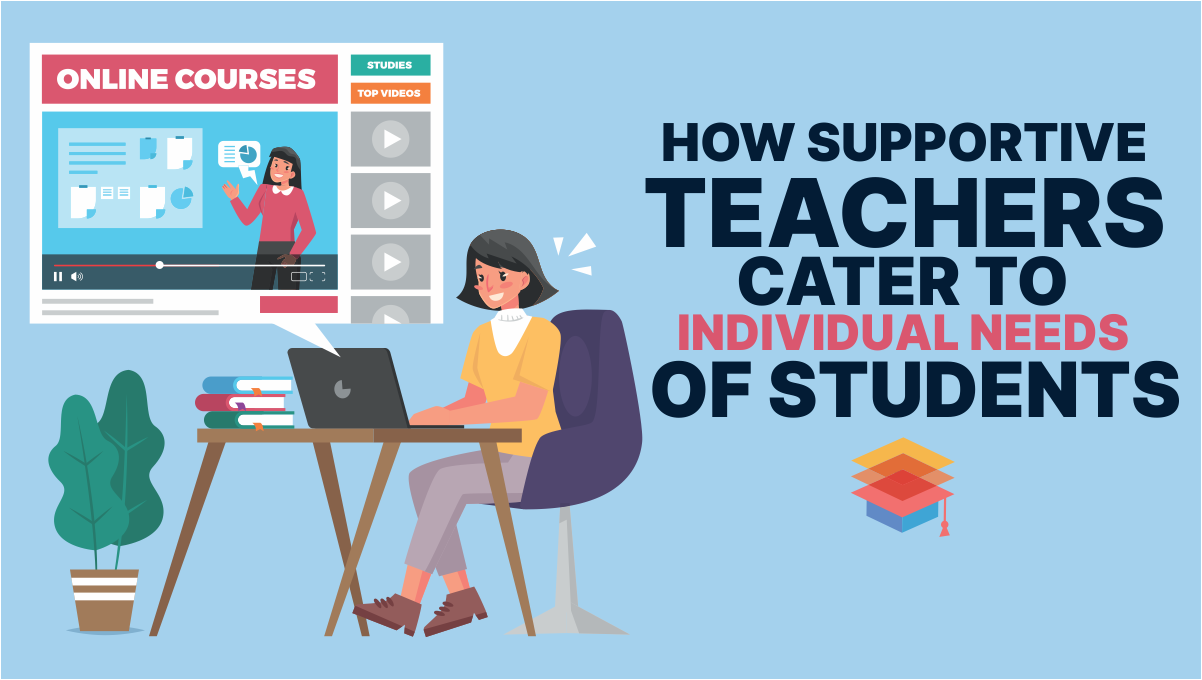
Therefore, forward-thinking teachers and institutions have evolved past the traditional classroom model to cater to individual students. As we’ll explore over the course of this article, the teachers at OES’s online high school achieve this personalized support in myriad ways, from flexible models to tech-enabled communication, student engagement to robust feedback.
It’s no longer feasible or practical to deny the widening presence of AI. Artificial intelligence is everywhere. It writes online articles (not this one, of course), underwrites mortgages, predicts the outcomes of baseball games, breathes life into customer service bots, deciphers long-lost texts from charred Pompeii scrolls… the list goes on.
Oh, and it’s also becoming increasingly prevalent in the classroom – to the concern and contentment of educators everywhere. Used effectively, AI can be a powerful tool in the classroom, capable of streamlining research and aiding in brainstorming. However, when used incorrectly or negligently, it commits one of the cardinal sins of academic integrity: plagiarism.
In this guide, your leading online high school in Ontario enters the debate. Below, we take stock of one of the latest education trends to supply students with a roadmap for responsible AI use. Here’s what to do – and what not to do – to prevent plagiarism and make the most of this cutting-edge tool.