
What Grades Do Universities Look At In Ontario?

Quick Recap— What Grades Do Universities Look At In Ontario?
- Ontario universities base admission decisions on Grade 12 U/M marks, including all required prerequisites for your chosen program.
- Grade 9 and Grade 10 marks aren’t used in admission decisions and don’t affect program eligibility.
- Grade 11 U/M marks are reviewed only for early offers, and even then, they’re temporary indicators—final decisions rely on completed Grade 12 results.
- Your Top 6 Grade 12 U/M courses determine your admission average, and prerequisites must be included even if they’re not your highest marks.
Students across Ontario often feel unsure about what grades universities look at in Ontario and how their marks actually influence admission decisions. The reality is that universities care far more about your most recent academic work than anything you completed in earlier years. Understanding how your marks are assessed—especially the distinction between Grade 11 and Grade 12 U/M courses—can make your next steps much clearer and help you focus on what truly matters.
Ontario eSecondary School offers Ministry-inspected, self-paced online courses that make it possible to upgrade marks, complete prerequisites, or finish high school from anywhere—and sometimes in as little as four weeks. If you’re working toward university and want a path that actually moves you forward, you’re in the right place.
What Grades Do Universities Look At In Ontario For Admission?
Ontario universities make admission decisions based on your Grade 12 U/M marks, because these courses best reflect your current academic ability and your readiness for post-secondary programs. These grades form the Ontario university admission average used for both conditional and final offers.
A common concern is how far back universities look when reviewing a transcript. Grade 9 and Grade 10 marks appear on your record, but they aren’t used in admission decisions and don’t affect program eligibility.
Grade 11 U/M marks play a much smaller role. Universities may reference them during early admission rounds—mainly in the fall—when Grade 12 marks are still limited. These Grade 11 results offer a sense of your academic direction, but they’re only temporary indicators. Final decisions always rely on your completed Grade 12 U/M courses, especially prerequisites.
If you need to complete a missing prerequisite or improve a mark for a competitive program, you can take Grade 12 U/M courses through our Ontario online high school at a flexible pace.
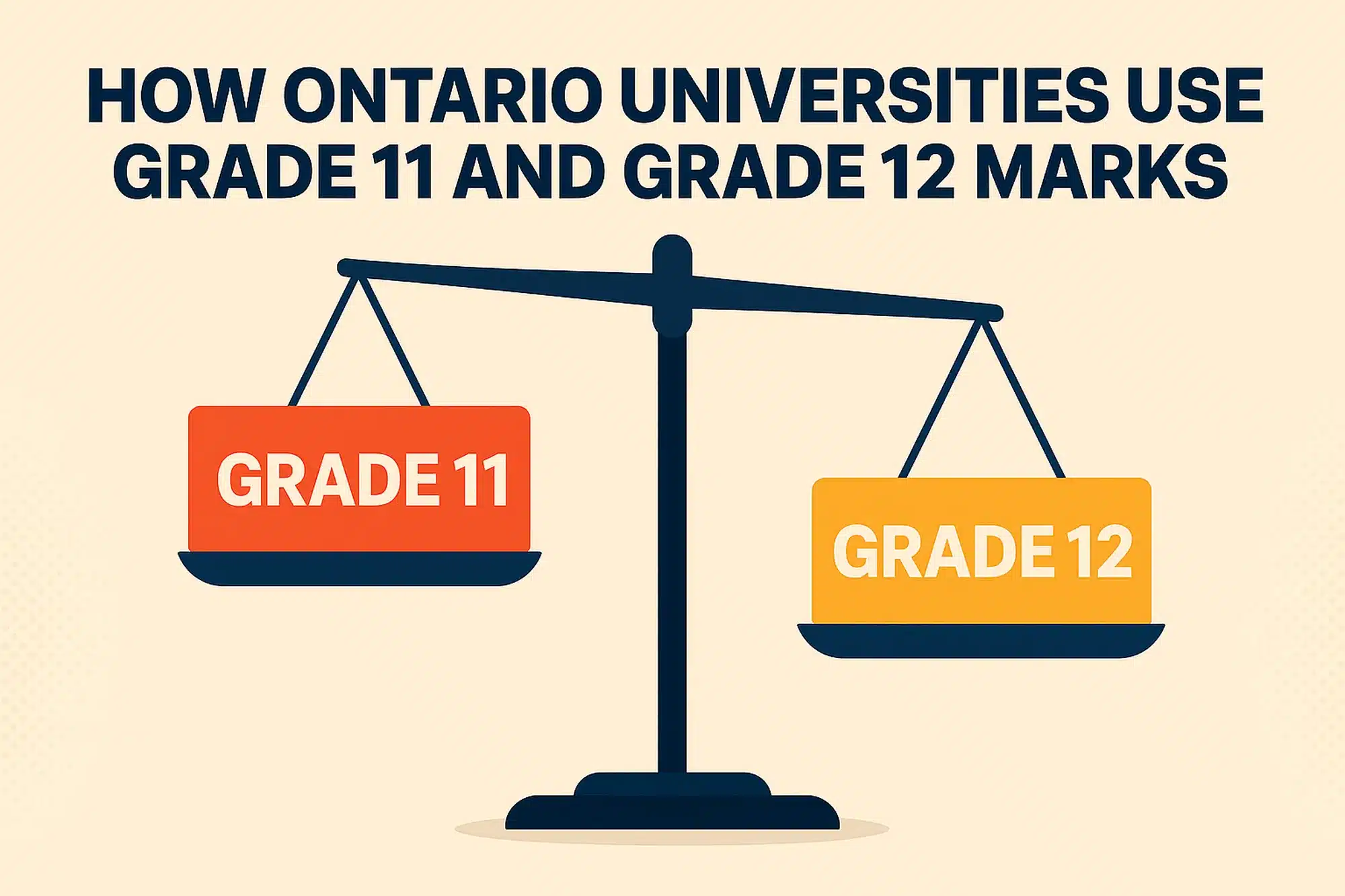
How Ontario Universities Use Grade 11 And Grade 12 Marks (And What Actually Counts)
Grade 11 and Grade 12 marks serve different purposes in the admissions process, and understanding how they’re evaluated can help you plan your course load more strategically. Grade 11 U/M courses help universities understand what level of senior courses you’re prepared to take and whether you’re on track with prerequisites. They can influence the timing of early offers, but not the final decision.
Grade 12 U/M courses carry the full weight of admission. Universities look closely at prerequisite grades, course difficulty, and your overall academic trend. Strong performance in Grade 12 can outweigh weaker Grade 11 results, which is why many students focus heavily on building a strong second-semester transcript.
This distinction matters for students who need flexibility with timing, especially adult learners or those upgrading courses. OES allows students to take Grade 11 or Grade 12 U/M courses year-round, which can help align your transcript with university admission cycles.
When Ontario Universities Receive Your Marks Through OUAC
Universities in Ontario can begin considering your admission application only after your high school submits your grades to OUAC. Schools send these in periodic batches through the year.
- Mid-November: Schools report midterm or final marks for 4U/M courses and projected enrolments.
- February – April: Completed Grade 12 U/M final grades and any updated in-progress marks are submitted.
- July: Final grades—including summer school and late-submitted courses—are sent and posted to university files.
Because timing can influence early offers, completing your courses in a timeframe aligned with these submissions is important. If you take Grade 11 or Grade 12 U/M courses online through a recognized provider like OES, your marks can be entered promptly, so your latest marks reach universities at the right time. For more details and timelines, OUAC’s Grades Collection page provides official guidance.
How Your Top 6 Grade 12 U/M Courses Are Used For Admission
Once your Grade 12 marks are submitted, universities calculate your admission average using your top 6 Grade 12 U/M courses. This calculation always includes the prerequisites required for your chosen program, and then the strongest remaining U/M marks to complete the six.
Your Top 6 must include:
- All required Grade 12 U/M prerequisites for the program
(e.g., ENG4U for most programs, MHF4U/MCV4U for engineering and business, SBI4U or SCH4U for life sciences) - Your highest remaining U/M marks to build the strongest possible average
If a prerequisite is part of your Top 6 but has a lower grade, it cannot be swapped out. This is why thoughtful course planning matters. Students often raise their admission average by adding an additional U/M elective or repeating a prerequisite to strengthen their overall score.
For students looking to raise their admission average, our guide on upgrading marks for university offers practical approaches that can help. If you want support mapping out your Top 6, OES’s Admissions Counselling service can walk you through a personalized plan aligned with university requirements.

Can You Still Get Into University If Your Grades Are Low or Do You Need To Retake Courses?
Students frequently fear that a single bad semester or a slow start in Grade 12 will prevent them from receiving an offer. In reality, universities in Ontario provide multiple pathways forward. If your early marks aren’t competitive, you still have options to build a stronger profile:
- Retake a course to replace a grade that’s weighing down your Top 6.
- Upgrade a prerequisite to meet a program cutoff or make your application more competitive.
- Add an extra Grade 12 U/M elective to raise your overall average.
- Plan your second-semester schedule strategically so your strongest courses appear in your final transcript.
Many students receive offers later in the cycle once stronger Grade 12 marks are submitted, especially if their academic trend improves.
Next Steps: Book A 15-Minute Academic Guidance Meeting And Register For Your OES Online Courses
If you’re working toward university and want a clear plan to strengthen your application, a quick conversation with an academic advisor can make your next steps much more manageable.
OES provides a Ministry-inspected, fully online learning environment designed to help students upgrade marks, complete prerequisites, or fast-track courses with flexible pacing.
To get personalized guidance and start building a stronger transcript, book a 15-Minute Academic Guidance Meeting and explore available courses today.