
What Is a Final Exam? Everything You Need to Know
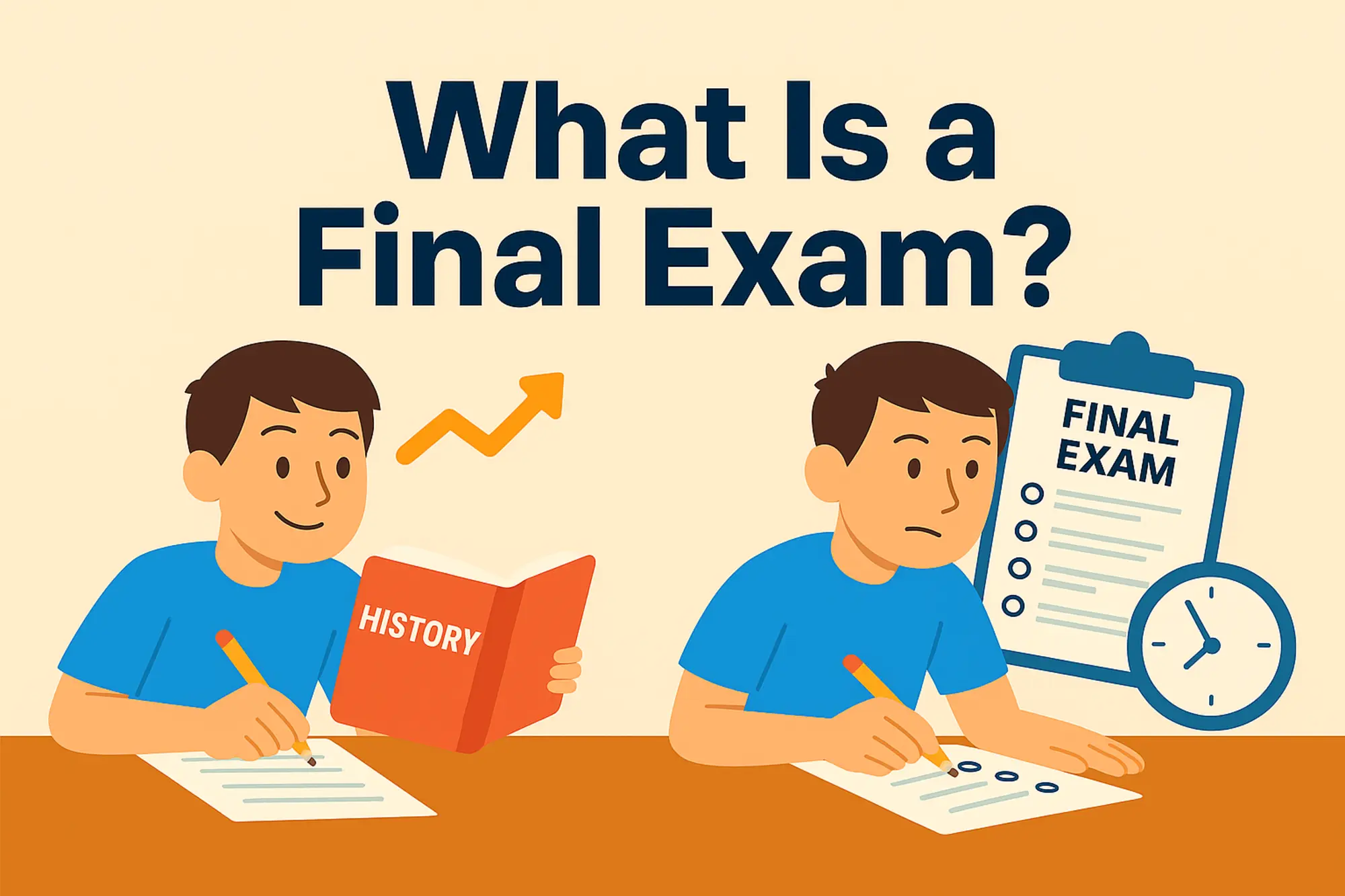
Quick Summary – What Is a Final Exam?
- Final exams make up part of the final 30% of your grade and assess how well you’ve met Ontario course expectations.
- Some exams are comprehensive or cumulative, meaning they cover major concepts or content from the full semester.
- Certain courses use a culminating assignment instead of a traditional exam, depending on Ministry requirements.
- At OES, exams are supervised and scheduled when you’re ready, offering flexibility for upgrading, timelines, or busy schedules.
- Strong final exam results can support university or college applications, and OES offers upgrade courses if you need to improve a mark.
It’s that time of year. You’re probably searching this because you have a final exam coming up and you’re not entirely sure what to expect—or what it’s actually measuring, or even you may even be wondering how to study for finals. A final exam isn’t just the last task in a course; it’s a structured evaluation based on the skills, concepts, and expectations set by the Ontario Ministry of Education, and it can carry significant weight in your final grade. That matters even more when you’re preparing for post-secondary applications and aiming for the strongest mark possible.
Let’s break down the details so you can approach your exam with clarity and confidence.
Ontario eSecondary School (OES), a Ministry-inspected Ontario online high school, offers flexible, self-paced OSSD courses that help students complete required credits on a schedule that works for them. If you’re exploring your next steps, this guide will help you understand exactly how final exams work, and how OES supports your success.
Understanding Final Exams in Ontario High School Courses
A final exam is typically the last evaluation in an Ontario high school course. It represents a portion of the final 30% evaluation that every credit must include, according to Ministry guidelines. This evaluation helps teachers confirm that students have met the overall expectations of the course.
How Final Exams Work in Online Courses at OES
OES follows the same Ministry standards as all accredited Ontario schools, while offering flexibility and self-paced learning. Students complete their coursework first, then schedule the final exam when they’re ready. Each exam is closed-book and supervised, either in person by an approved proctor or through OES’s online monitoring system. This structure works especially well for learners upgrading marks, balancing work or family responsibilities, or studying from outside Canada.
Cumulative vs Comprehensive Final Exams: What to Expect
Students encounter different types of final evaluations across Ontario high school courses, and some are described as comprehensive. A comprehensive final exam focuses on the major concepts, skills, and themes taught throughout the course, and often requires students to apply their learning in deeper, more analytical ways.
You may also see courses with a cumulative final exam, which includes material from the entire semester—from the first unit to the last. This format is common in subjects like math, science, and business, where earlier concepts provide the foundation for later learning. Knowing that an exam is cumulative early in the semester helps students plan their study habits, stay organized, and avoid last-minute cramming.
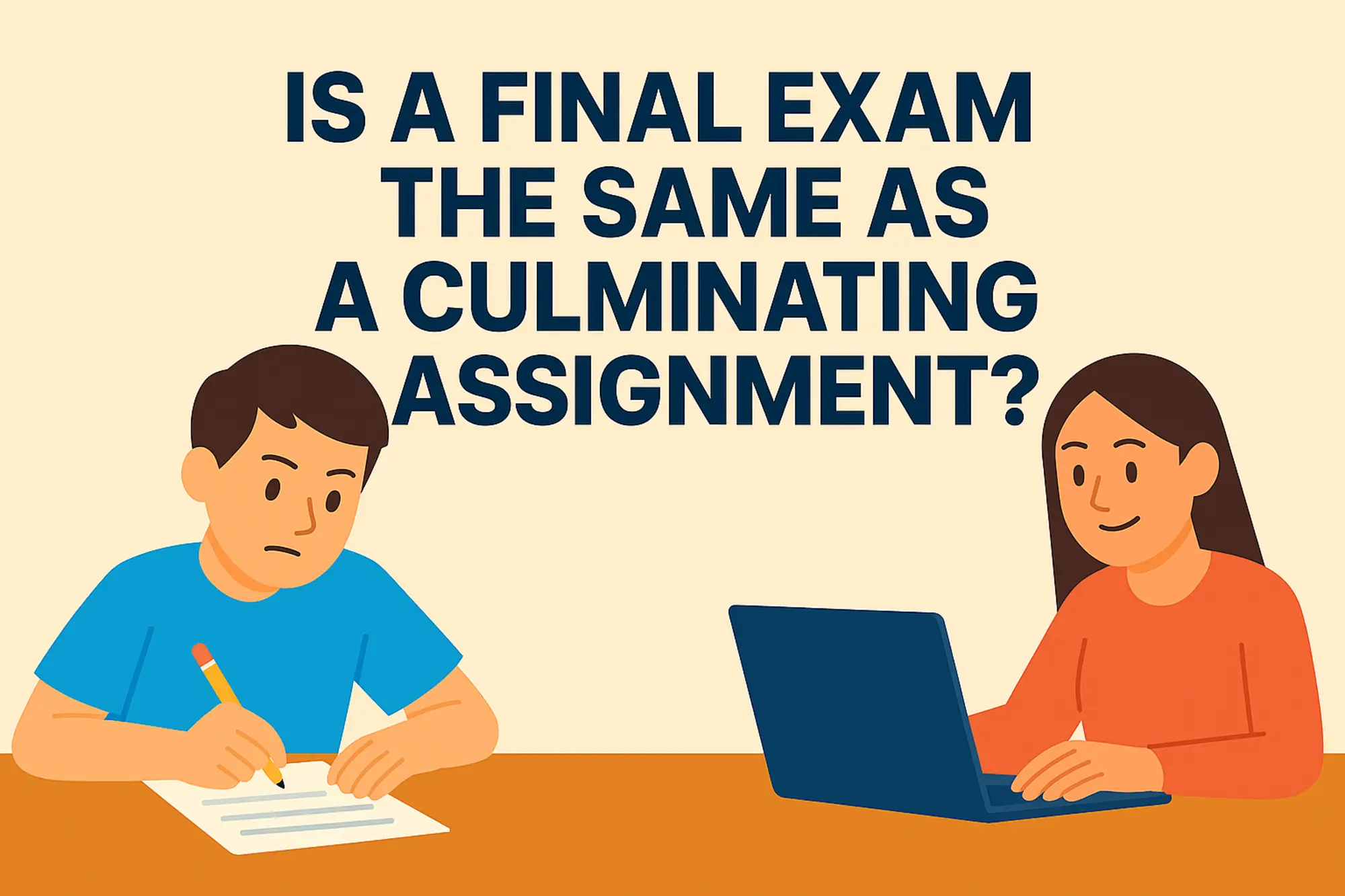
Is a Final Exam the Same as a Culminating Assignment?
Final exams and culminating assignments often get compared because they both fall within the final 30% of a course, but they serve different purposes. A final exam is usually timed and completed in a single sitting. A culminating assignment is a multi-step task—such as a project, lab investigation, presentation, or essay—that measures how well you can apply what you’ve learned.
Some Ontario courses use only a culminating assignment, some use only a final exam, and others use a combination of both. Regardless of the format, all final evaluations must align with Ministry expectations and make up the final 30% of the grade. OES outlines this clearly in each course description so students know exactly how they’ll be assessed from the beginning.
Frequently Asked Questions About Final Exams
How Long Is a Typical Final Exam?
Most Ontario high school final exams range from 1.5 to 3 hours. Length varies by subject, but OES provides clear expectations in each syllabus so students can plan ahead. Reviewing sample questions and practicing timed responses can help you feel more comfortable before your exam.
What Happens If You Fail a Final Exam?
Final exams contribute to the last 30% of your grade, but failing the exam doesn’t automatically mean failing the course. Your term work—which counts for 70%—may still allow you to pass. If you want to improve your mark after completing a course, OES offers dedicated upgrade options that allow students to retake a course for a higher grade.
Do Final Exams Affect University or College Admissions?
Yes. Universities and colleges review your final grades, including your exam results, through OUAC or OCAS. A strong final evaluation can help you meet or exceed program cutoffs, especially in competitive programs. OES supports students who need to upgrade Grade 11 or Grade 12 courses quickly so they can meet application timelines. You can also access academic planning support if you need guidance choosing the right courses or understanding admission requirements.
Do All OES Courses Require a Final Exam for the OSSD?
At OES, most courses require a final exam as part of the 30% final evaluation. However, some courses replace the final exam with a culminating assignment or alternate final evaluation. Each course description clearly indicates which format will be used, so students always know exactly what to expect.
Book a 15-Minute Academic Guidance Meeting and Register for Your OES Courses

If you’re planning your next steps—upgrading a course, starting your OSSD, or preparing for post-secondary—an OES guidance advisor can help you map out the right path. You can book a 15-minute Academic Guidance Meeting to get personalized support and clarity on what to take next.